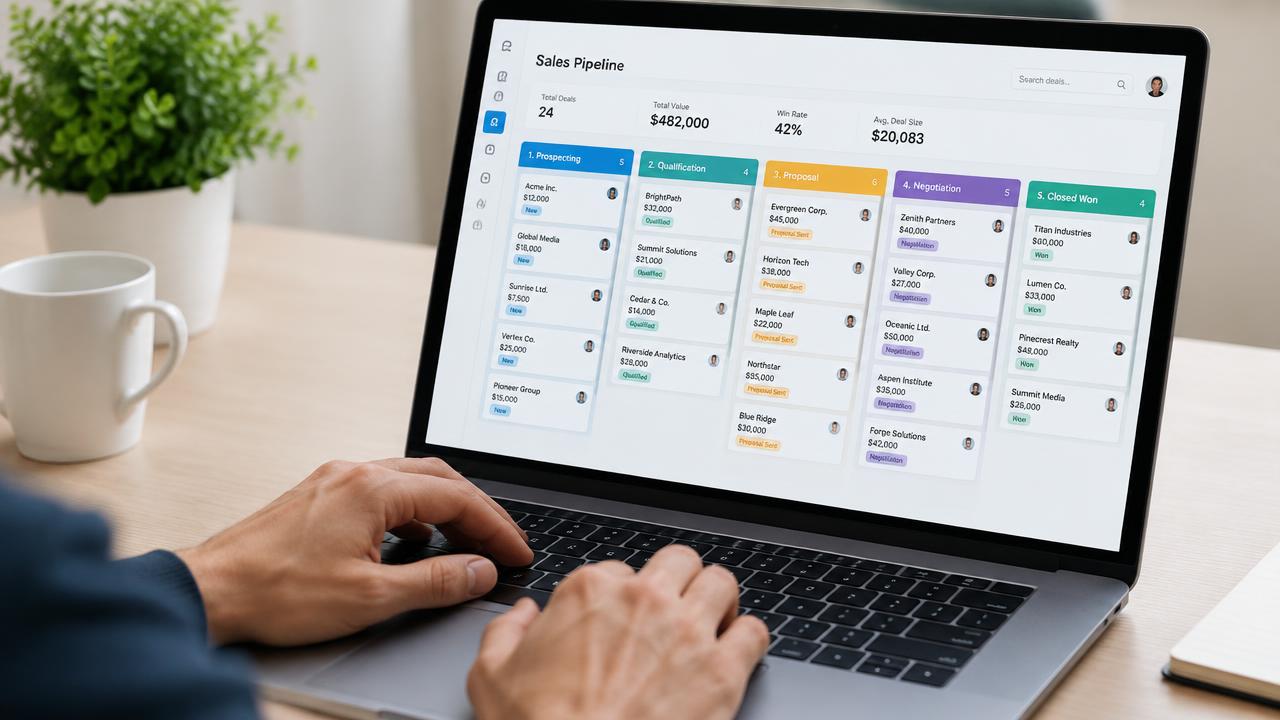










A customer can be satisfied with the product and still leave because the relationship became difficult to manage. An unresolved billing issue, a confusing implementation, or a renewal conversation that starts too late can outweigh months of useful service. These problems often span departments, which makes them hard to see from a single team’s queue.
A CRM helps when it connects those scattered interactions to clear responsibilities. It does not create loyalty merely by storing contact details or sending automated check-ins. Retention improves when employees can recognize an emerging problem, understand its context, and take a useful next step. The following operating approach turns that principle into onboarding, support, and renewal workflows.
Key Takeaways
- Organize customer records around outcomes, responsibilities, and service history.
- Use risk indicators to start an investigation rather than automatically trigger a discount.
- Give support escalations a named owner and a visible follow-up commitment.
- Separate customer retention from revenue retention when measuring results.
- Automate coordination while preserving human judgment for sensitive conversations.
Define What Retention Means for Your Business
Start by describing the relationship you intend to preserve. A subscription company may focus on customers renewing at the end of a contract. A distributor may care about repeat orders within an expected purchase cycle. A professional services firm may measure repeat engagements after project completion. The relevant interval and evidence of continued value differ.
Write down how you will identify a lost customer, a partial contraction, and a temporary pause. Otherwise, teams can report incompatible results while believing they are discussing the same metric. Document how mergers, account consolidations, and seasonal buying patterns affect the count.
Assign operational ownership as well. Sales may own commercial negotiations, customer success may coordinate adoption, and support may handle technical incidents. One accountable relationship owner should be able to connect those activities without becoming responsible for doing every task personally.
Create a Customer Record People Can Use
The account view should answer practical questions quickly: what did this customer purchase, what outcome did they expect, who is involved, and what is currently blocking progress? Store contractual commitments and renewal information in structured fields where possible, with links to the authoritative documents.
Separate verified facts from interpretations. A support case marked unresolved is a fact; a note saying the buyer seems unhappy is an observation that needs context. Include the observation’s author, date, and supporting interaction so the next person does not treat a passing impression as a permanent customer characteristic.
Capture the people behind the account
For B2B relationships, record the administrator, primary users, economic decision-maker, and executive sponsor when relevant. Track changes in those roles. A departing internal champion can disrupt a renewal even when product usage is steady. Build relationships with appropriate additional stakeholders rather than depending on one friendly contact.
Limit the record to information that helps serve the customer. Private personal details, speculative comments, or copied sensitive documents rarely improve service and can create privacy risk. Use access controls when commercial or personal information should not be visible to everyone.
Make Onboarding a Managed Handoff
Retention work starts before the first service issue. At the sales-to-service handoff, transfer the customer’s goals, promised scope, timing constraints, and known dependencies. A signed contract alone rarely explains why the customer bought or what would make the first few weeks successful.
Translate that context into milestones with an owner and a target date. Examples include completing a configuration review, importing essential records, training administrators, and delivering the first usable report. The milestone should describe an observable outcome rather than an internal activity such as sending a welcome message.
Build an exception queue for blocked onboarding. Record whether the obstacle belongs to your organization, the customer, or a third party. This distinction prevents employees from repeatedly chasing the customer when the real issue is an unfinished internal integration. Agree on a revised plan with the customer instead of silently moving due dates.
AD SLOT
Connect Service Cases to the Wider Relationship
A CRM and a help desk may be separate applications. If so, the account view should still show relevant case status, severity, owner, and the next promised update. Support agents need enough commercial and implementation context to understand impact, but they should not have to browse unrelated sales notes to answer a routine question.
Define case priority using customer impact and urgency. An issue affecting a customer’s production workflow may require more attention than a minor inconvenience reported by a senior contact. Clear criteria reduce inconsistent treatment and make escalation decisions easier to explain.
Close the communication gap
Customers often become frustrated because they do not know what is happening, even when technical work is underway. Store the next update commitment and make overdue commitments visible to the responsible manager. A useful update explains the current status, the next action, and when the customer will hear more.
Do not equate a closed ticket with a repaired relationship. After a serious incident, ask whether the solution worked in the customer’s environment and whether there are remaining operational effects. That follow-up may reveal training needs, lost trust, or a recurring defect that individual case closures conceal.
| Signal | Recommended response | Evidence of completion |
|---|---|---|
| Onboarding milestone missed | Identify the blocker and agree on a recovery plan | Customer accepts revised responsibilities |
| Repeated cases about one issue | Open a coordinated problem review | Root cause and corrective action documented |
| Primary sponsor leaves | Confirm a replacement and rebuild context | New stakeholder validates priorities |
| Usage drops unexpectedly | Check instrumentation and ask about changing needs | Cause confirmed and next step agreed |
| Renewal lacks an owner | Assign responsibility and verify procurement timing | Mutual renewal plan recorded |
Use Risk Signals With Appropriate Context
Useful indicators can include missed milestones, declining adoption, recurring unresolved incidents, unpaid invoices, or reduced stakeholder engagement. None proves that cancellation is imminent. Usage can fall because of seasonality, a completed project, changed instrumentation, or a customer moving to a different workflow.
For each signal, define the source, expected refresh frequency, and responsible reviewer. A dashboard built on stale integration data can cause unnecessary outreach while hiding genuine problems. Show when the underlying information was last updated, especially for financial and product-use fields.
If you use a health score, make its components visible. Combining adoption, relationship coverage, and service status into one label can aid prioritization, but employees still need to know why the label changed. Avoid a score that automatically overwrites an account owner’s documented assessment without explanation.
Choose responses that match the cause
A training gap calls for enablement, not a discount. An unreliable feature needs technical remediation, not another newsletter. A customer whose business has changed may need a different package or a respectful discussion about fit. Matching the intervention to the cause protects both the relationship and your margin.
Use human review before sending messages that imply surveillance or distress. Telling someone that your system noticed their declining activity can sound intrusive. A more useful conversation asks whether priorities have shifted and offers specific help grounded in the relationship.
Plan Renewals Around the Customer’s Decision Process
Work backward from the actual decision, not just the contract expiration. Procurement reviews, budget approval, security assessments, and legal negotiations may begin much earlier. Record notice requirements and buying steps so the customer is not forced into an unnecessary last-minute decision.
Before discussing commercial terms, summarize the outcomes achieved and any unresolved commitments. Use evidence the customer recognizes, such as a completed rollout or a reduction in a recurring operational problem. Product activity alone is not proof that the customer received the intended business value.
Keep renewal planning distinct from expansion pressure. An account with unresolved service issues may need recovery before a broader proposal is appropriate. Coordinate contact across sales and service so the customer does not receive an upgrade pitch immediately after reporting a serious problem.
AD SLOT
Measure Retention Without Confusing the Metrics
Customer retention measures how many customers from an opening group remain at the end of the period. New customers acquired during that period should not inflate that cohort’s retention result. Revenue measures answer a different question and are important when accounts vary substantially in size.
Gross revenue retention looks at recurring revenue preserved from the opening cohort after churn and contraction, excluding expansion. Net revenue retention also includes expansion from those same customers. Apply consistent definitions and timing rules, and keep new-customer revenue outside both calculations.
For example, imagine an opening cohort with $100,000 in recurring revenue. If cancellations and reductions remove $10,000 while existing customers add $15,000, gross revenue retention is 90% and net revenue retention is 105%. These are hypothetical figures illustrating why a strong net result can coexist with losses that still deserve investigation.
Segment results by customer type, onboarding approach, tenure, and relevant service patterns. Small samples can fluctuate sharply, so avoid treating every month-to-month change as evidence of a successful intervention. Review actual lost-account histories alongside aggregate results.
Establish a Review Routine That Produces Action
A retention meeting should resolve decisions, not recite a dashboard. Focus on accounts where someone needs help removing a blocker, approving a remedy, or coordinating across departments. Require a next step, accountable owner, and review date for each discussed account.
Periodically examine whether automated tasks are being completed meaningfully. A checked box saying contacted customer provides little evidence of progress. Capture the customer’s response or the agreed action, while keeping documentation short enough that employees can maintain it during a busy workday.
Review recurring reasons for dissatisfaction with product and operations leaders. If many customers need the same workaround, the answer may be a process or product change rather than more relationship management. CRM records are most valuable when they help prevent the next issue, not just describe the last one.
Frequently Asked Questions
Does customer retention require a separate customer success platform?
Not always. A CRM can support account ownership, milestone tracking, service visibility, and renewal tasks. A specialized platform may help with more complex product telemetry or portfolio management, but it cannot replace agreed responsibilities.
What should a small team automate first?
Start with internal coordination: assigning onboarding tasks, reminding owners about commitments, and flagging unattended cases. These workflows reduce dropped handoffs without subjecting customers to a large volume of generic messages.
Should every unhappy customer receive a discount?
No. Understand the problem and the remedy the customer actually needs. Commercial concessions may be appropriate in some circumstances, but they do not repair recurring defects, unclear expectations, or ineffective support.
How frequently should account health be reviewed?
Match the cadence to relationship complexity and data freshness. High-impact incidents need prompt attention, while stable accounts may need less frequent review. Trigger-based checks can complement scheduled portfolio discussions.
Can satisfaction surveys predict renewals?
They provide useful feedback but should not stand alone. Respondents may not control the buying decision, and silent customers may have different experiences. Combine feedback with outcomes, service history, stakeholder coverage, and direct renewal discussions.
Conclusion
Customer retention becomes more manageable when the CRM connects evidence to responsibility. Preserve the original customer goals, coordinate onboarding, maintain visible service commitments, and begin renewal conversations with enough context to be useful. Measure the results by cohort and investigate the reasons behind departures. The objective is not more recorded activity; it is a relationship in which customers can reliably obtain the value they expected.